

Hair Growth 101: The Science Behind Your Mane (No BS Edition)
Posted by Stallion on Dec 8th 2025
Look, I'll be honest with you—I spent way too long thinking hair just... happened. Like grass. Or taxes. You wake up, it's there, sometimes it's not, and nobody really questions the mechanics of it all.
But here's the thing: understanding how your hair actually grows isn't just some nerdy biology lesson. It's the difference between throwing money at random products that promise "miraculous growth" and actually knowing what the hell is going on up there. And trust me, once you get it, everything else—the products, the routines, the panic when you see more hair in the shower drain than on your head—starts to make sense.
So let's dive in. No gimmicks, no pseudoscience, just the real deal on how those follicles of yours are (or aren't) doing their job.
The Hair Growth Cycle: Your Follicles Have a Schedule (And They're Sticking to It)
First things first: your hair doesn't just grow continuously like some sort of biological Rapunzel situation. It follows a very specific cycle, and understanding this cycle is absolutely crucial. Think of it like seasons—there's a time for growth, a time for rest, and a time for... well, saying goodbye.
The Three Phases That Run Your Hair's Life
Anagen: The Growth Phase (The Good Times)
This is when your hair follicle is basically a little factory, pumping out new hair cells like it's getting paid overtime. For the hair on your scalp, this phase lasts anywhere from 2 to 7 years. Yeah, years.
Here's something wild: the length of your anagen phase is mostly genetic. So if your dad's hair maxed out at shoulder length, yours probably will too. That's not hair loss—that's just your natural cycle doing its thing. Some people can grow their hair down to their waist, others tap out at 6 inches. It's all in the genes, baby.
During this phase, your hair grows about 1 centimeter per month—roughly half an inch. That might not sound like much, but over the course of several years, it adds up. This is why some people can achieve seriously impressive lengths while others seem to plateau.
Catagen: The Transition Phase (The Awkward Middle)
This is the "okay, I'm done for now" phase. It lasts about 2 weeks, and during this time, your follicle basically shuts down production. The hair detaches from the blood supply and just... hangs out. It's like your follicle is taking a smoke break.
Telogen: The Resting Phase (The Waiting Game)
This can last 3 to 4 months. Your hair is just sitting there, waiting to fall out. And when it does? A new hair should start growing in its place. Should being the operative word here.
This is why you lose about 100 hairs a day and don't go bald—because new ones are constantly replacing them. It's a beautiful system when it works. When it doesn't? Well, that's when things get interesting.
What Actually Happens Under Your Scalp (The Factory Floor)
Imagine your hair follicle as a tiny, incredibly efficient factory buried in your scalp. At the base of this factory is something called the dermal papilla—think of it as the control center. It's surrounded by hair matrix cells, which are basically the workers on the assembly line.
These matrix cells divide like crazy during the anagen phase, creating new hair cells. As new cells form, they push the older cells up and out of the follicle. As these cells move up, they harden and die (yeah, your hair is technically dead—sorry to break it to you), forming the hair shaft that eventually pokes through your scalp.
The structure itself is pretty fascinating when you break it down. Each hair has a visible shaft (the part you see) and a root that extends deep into your skin. The root is surrounded by the hair follicle—a sheath of skin and connective tissue that's also connected to a sebaceous gland. This gland produces the natural oils that keep your hair from turning into straw.
The Blood Supply: Your Hair's Lifeline
Here's something most people don't realize: your hair follicles need nutrients and oxygen to function, and they get this through tiny blood vessels in your scalp. It's like a delivery system bringing supplies to the factory floor.
At the base of the hair bulb, there's something called the hair papilla, which supplies the hair root with blood. New hair cells are constantly being made in the hair bulb, close to this papilla. Without that blood supply, your follicles are basically working without resources.
When circulation is poor—whether from aging, stress, or just bad genetics—it's like trying to water your plants with a kinked hose. The water's there, but it's not getting through. And when your follicles aren't getting what they need? Growth slows down, hair gets thinner, and eventually, the factory might shut down altogether.
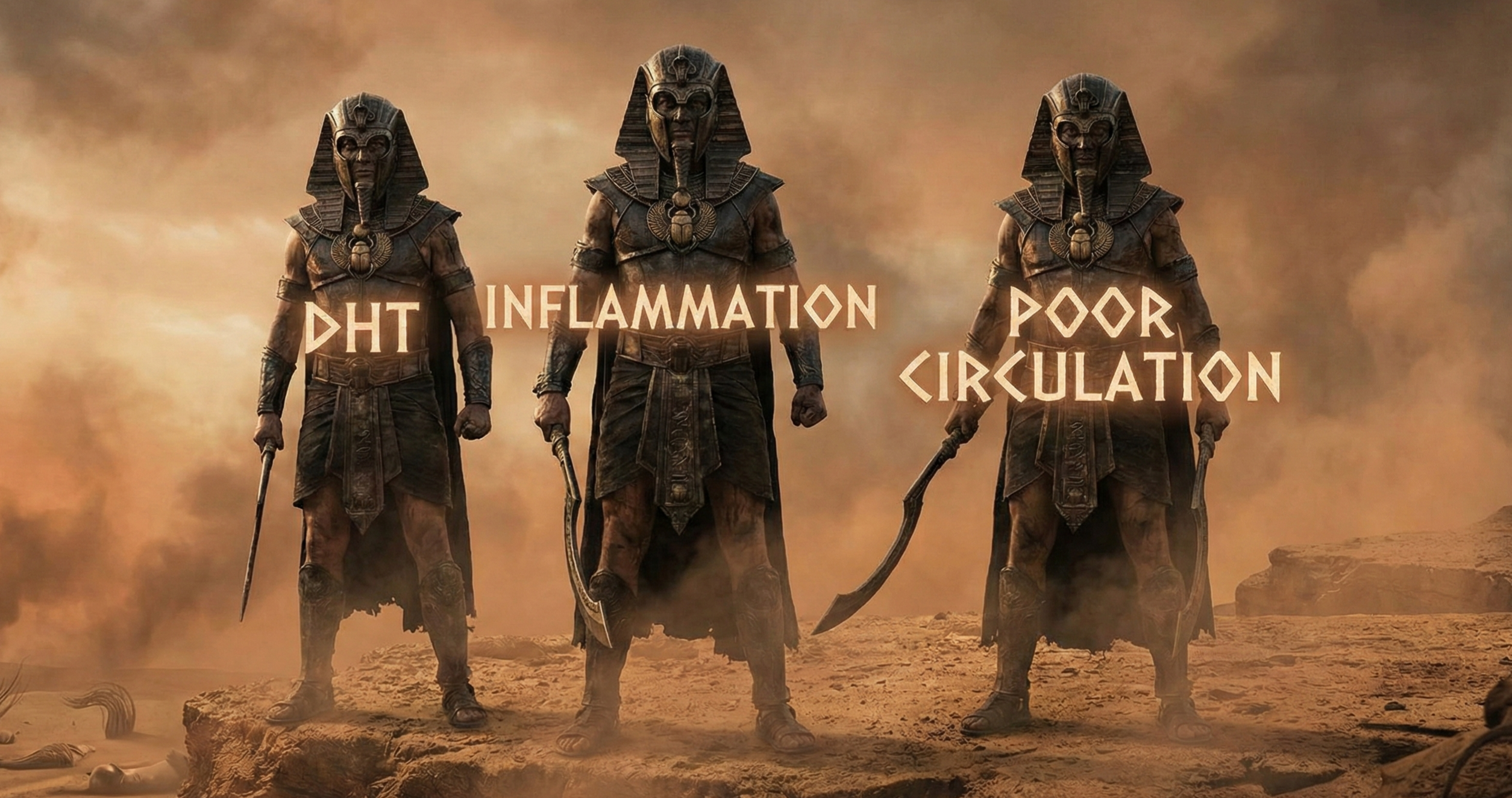
Why Your Hair Stops Growing (The 3 Horsemen of Hair Loss)
Alright, so we know how hair should grow. But what happens when it doesn't? Your hair follicles can go into what I call "hibernation mode." They're not dead—they're just sleeping. And there are three main culprits behind this:
1. DHT: The Bully at Your Follicle's Door
DHT (dihydrotestosterone) is a hormone your body makes from testosterone. For some guys—and yes, this affects women too, just differently—their hair follicles are super sensitive to this stuff.
Think of DHT like a bully that shows up at your follicle's door every single day. At first, your follicle can handle it. But over time? It gets worn down. The hair gets thinner, the growth phase gets shorter, and eventually, the follicle just gives up. This is androgenic alopecia—male pattern baldness—and it affects about 50% of guys over 50.
Here's what DHT does to your follicles:
- Shrinks the follicle (miniaturization)
- Shortens the anagen phase
- Produces thinner, weaker hair
- Eventually causes the follicle to stop producing hair altogether
2. Inflammation: Growing Hair in Polluted Soil
Your scalp is supposed to be a healthy environment where follicles can thrive. But chronic inflammation? That's like trying to grow a garden in polluted soil. It's just not going to work very well.
What causes scalp inflammation?
- Stress (the silent killer)
- Poor diet (you are what you eat, including your hair)
- Lack of sleep (your body repairs itself at night)
- Tight hairstyles or hats (constant tension and friction)
- Harsh chemical treatments
An inflamed scalp creates an environment where follicles struggle to function properly. It's like trying to work in an office where the AC is broken, the lights flicker, and someone's always microwaving fish. Not ideal.
3. Poor Circulation: The Kinked Hose Problem
Remember that blood supply we talked about? As we age, or if we have poor circulation in general, those tiny blood vessels can become less efficient. Your follicles aren't getting the nutrients and oxygen they need to produce healthy hair.
This is why scalp massage actually works—it increases blood flow to the area. Studies have shown that just 5 minutes a day of gentle massage can increase blood flow to your follicles by up to 69%. (Nice.)
The Three-Pillar Framework for Natural Hair Growth
Here's what blew my mind when I first learned this: most people dealing with hair loss have all three of these issues at once. They're dealing with DHT sensitivity, inflammation, and poor circulation. No wonder that expensive shampoo didn't work, right?
But here's the good news: those follicles aren't dead—they're just sleeping. And we can potentially wake them up. But you can't just attack one problem—you need a comprehensive approach.
Pillar 1: Block DHT
Now, I'm not a doctor, so I can't tell you to take finasteride or anything like that. But there are natural DHT blockers that have shown promise in studies:
- Saw palmetto: Inhibits the enzyme that converts testosterone to DHT
- Pumpkin seed oil: Contains compounds that may block DHT
- Green tea extract: Rich in EGCG, which may reduce DHT levels
These ingredients help create an environment where DHT has less impact on your follicles. Think of it as putting up a shield rather than letting the bully run wild.
Pillar 2: Calm the Inflammation
This is where lifestyle comes in big time:
What you can do:
- Get better sleep (7-9 hours, seriously)
- Manage stress (meditation, exercise, whatever works for you)
- Eat anti-inflammatory foods (fatty fish, leafy greens, berries)
- Use topical ingredients like rosemary oil (shown in studies to be as effective as 2% minoxidil) or turmeric (a powerful anti-inflammatory)
Your scalp is skin, and like the skin on your face, it responds to how you treat your body overall. You can't out-supplement a terrible lifestyle.
Pillar 3: Boost Blood Flow
This is where scalp massage comes in clutch. But you can also use ingredients that naturally improve circulation:
- Peppermint oil: Creates a cooling sensation and increases blood flow
- Ginkgo biloba: Improves circulation throughout the body, including the scalp
- Rosemary oil: Not just anti-inflammatory, but also stimulates circulation
Here's the key: you need all three pillars working together. It's not enough to block DHT if your scalp is inflamed. It's not enough to improve circulation if DHT is still attacking your follicles. This is why most single-ingredient solutions fail—they're only addressing one piece of the puzzle.
What Phase Is Your Hair In?
Answer these quick questions to understand your hair growth cycle
1. How much hair do you typically lose per day?
2. Have you noticed any changes in your hair recently?
3. Have you experienced any major stress or life changes in the past 3-6 months?
The Timeline: What to Actually Expect
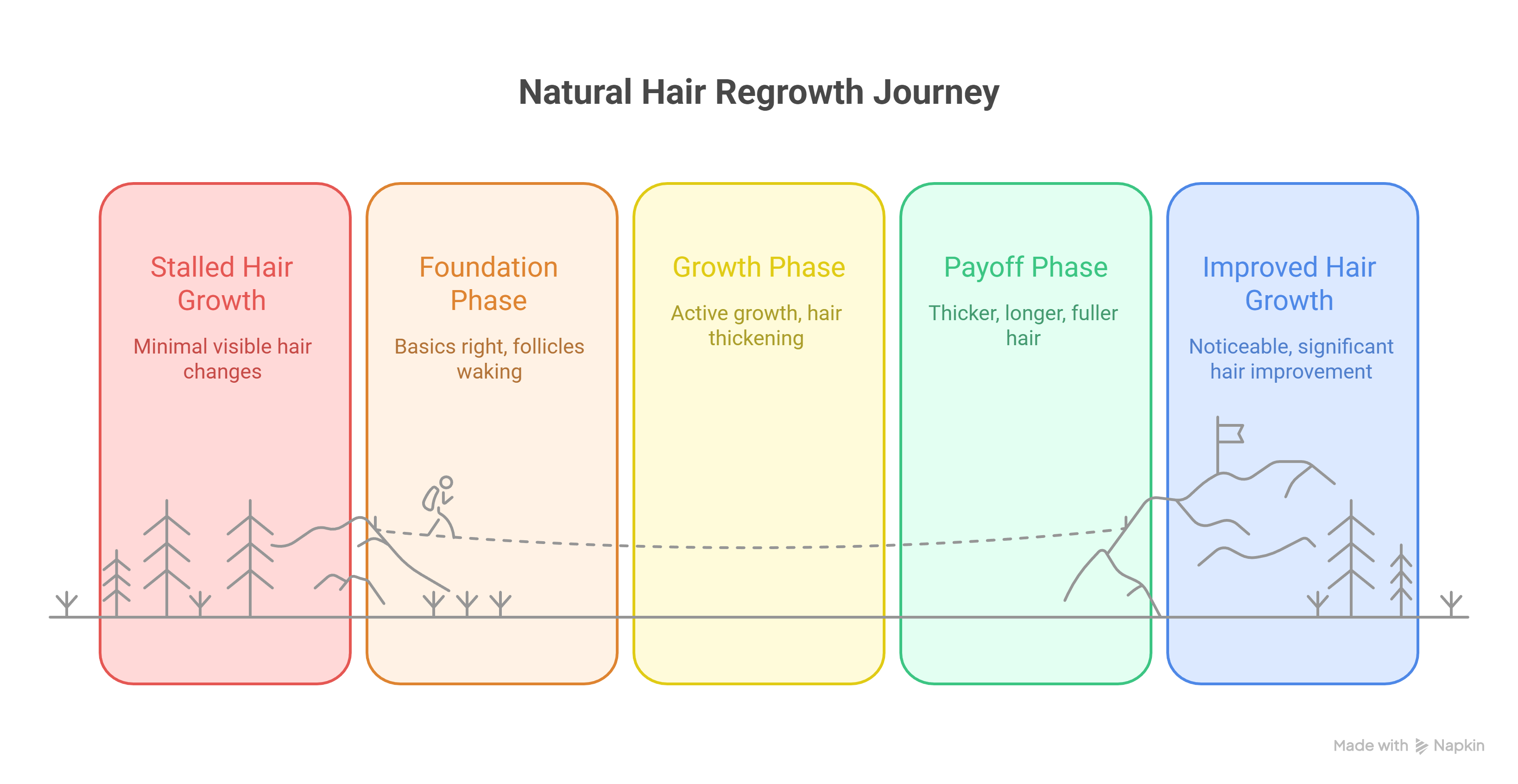
Let me be real with you: natural hair regrowth takes time. Like, a frustrating amount of time. But understanding the timeline helps you stick with it instead of giving up after two weeks because you don't see results.
Months 1-3: The Foundation Phase
This is when you're getting the basics right—using the right products, doing scalp massages, cleaning up your diet. You probably won't see huge visible changes, but you might notice:
- Less hair in the shower drain
- A few baby hairs starting to appear
- Your scalp feeling healthier overall
Don't get discouraged. Your follicles are waking up, but they're still in the early stages of the growth cycle.
Months 4-6: The "Oh, Something's Happening" Phase
This is where things get interesting. You'll start seeing:
- More baby hairs around your hairline (those fuzzy little guys that weren't there before)
- Existing hair looking slightly thicker
- Maybe some comments from people who see you regularly
Your follicles are now in active growth mode, but the hair is still fine and short.
Months 7-12: The Payoff Phase
By now, those baby hairs are getting thicker and longer. Your barber might even comment that your hair looks fuller. This is when you start seeing real, noticeable improvement.
Important reality check: You're probably not getting back your teenage hairline. That's just not realistic for most people. But significant improvement? Absolutely possible.
Common Myths That Need to Die
Let's clear up some BS that's been floating around:
Myth 1: "Shaving your head makes hair grow back thicker"
Nope. Shaving doesn't affect the follicle at all. It just makes the hair appear thicker because you're seeing the blunt edge instead of the tapered end.
Myth 2: "Wearing hats causes baldness"
Unless your hat is so tight it's cutting off circulation (in which case, why?), this isn't true. Male pattern baldness is genetic, not hat-induced.
Myth 3: "You can repair split ends"
You can't. Once the hair shaft splits, it's done. You can temporarily seal it with products, but the only real solution is cutting it off.
Myth 4: "Hair grows faster if you cut it regularly"
Hair grows from the root, not the tip. Cutting the ends doesn't affect what's happening at the follicle level. However, regular trims do prevent breakage, which can make your hair appear to grow faster because you're retaining length.
The Role of Nutrition: You Are What You Eat (Including Your Hair)
Your hair is made primarily of keratin, which is a protein. So if you're not getting enough protein in your diet, your body isn't going to prioritize hair growth. It's going to focus on, you know, keeping you alive.
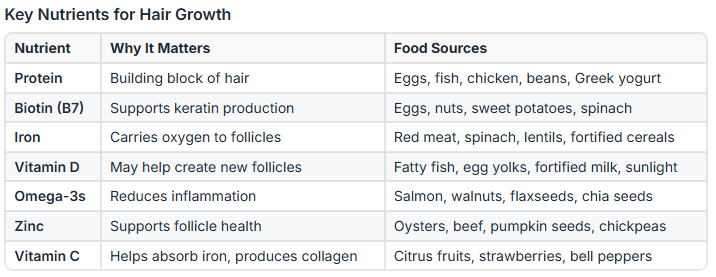
You don't need to obsess over every single nutrient, but if your diet is mostly processed junk, don't be surprised when your hair reflects that.
Scalp Health: The Foundation Everything Else Builds On
Here's something that doesn't get talked about enough: you can have all the right nutrients, all the right products, but if your scalp is a mess, nothing's going to work properly.
Signs Your Scalp Needs Help
- Excessive flaking or dandruff
- Itchiness or irritation
- Redness or inflammation
- Excessive oiliness or dryness
- Buildup from products
The fix: Treat your scalp like you treat the skin on your face. It needs to be clean, balanced, and healthy. That means:
- Regular cleansing (but not over-cleansing—2-3 times a week for most people)
- Exfoliation (once a week to remove dead skin and buildup)
- Moisturizing (yes, your scalp needs moisture too)
- Protection (from sun, harsh chemicals, and excessive heat)
The Stress Factor: Why Your Hair Freaks Out When You Do
Stress is one of those things everyone knows is bad but nobody really takes seriously until something goes wrong. When it comes to hair, stress can literally push your follicles into the telogen (resting) phase prematurely.
This is called telogen effluvium, and it's when a significant number of follicles enter the resting phase at the same time. A few months later—boom—massive shedding. It's your body's way of saying, "Hey, we're in survival mode here, and hair isn't a priority right now."
Common stress triggers:
- Major life events (death, divorce, job loss)
- Severe illness or surgery
- Crash dieting or nutritional deficiencies
- Childbirth (for women)
- Chronic, ongoing stress
The good news? Telogen effluvium is usually temporary. Once you address the stressor, your hair typically grows back. But it takes time—remember that growth cycle we talked about.
Understanding Hair Follicle Damage and Recovery
One thing that gives me hope when talking to guys dealing with hair loss is this: if you damage your hair follicles, they can actually repair themselves. Your hair will grow back. It could take up to four years before you see new hair growth out of damaged follicles, depending on the severity of the damage, but it's possible.
The catch? Frequent injuries to your skin and hair follicles can produce scars, which make growing hair difficult. Hair that does grow back is often thinner and more fragile than normal. This can lead to permanent hair loss at the site of the injured skin.
This is why being gentle with your hair and scalp matters. Those tight hairstyles, harsh chemical treatments, and aggressive brushing? They're not just damaging your hair—they're potentially damaging the follicles themselves.
Frequently Asked Questions
How fast does hair actually grow?
On average, hair grows about half an inch per month, or roughly 6 inches per year. But this varies based on genetics, age, health, and ethnicity. Asian hair tends to grow fastest, followed by Caucasian, then African hair. But individual variation is huge—some people grow hair faster, some slower.
Can you speed up hair growth?
You can't change your genetic growth rate, but you can optimize conditions so your hair grows at its maximum potential. That means addressing the three pillars: blocking DHT, reducing inflammation, and improving circulation. You can also prevent breakage, which helps you retain length.
Why does hair stop growing at a certain length?
It doesn't actually stop—it just reaches the end of its anagen phase. If your anagen phase is 3 years and your hair grows 6 inches per year, your maximum length is about 18 inches. After that, the hair enters the resting phase and eventually falls out, making room for new growth.
Does hair grow faster in summer?
There's some evidence that hair grows slightly faster in warmer months, possibly due to increased circulation and vitamin D production. But the difference is minimal—we're talking maybe 10-15% faster at most.
Can stress really make your hair fall out?
Absolutely. Severe stress can trigger telogen effluvium, pushing a large number of follicles into the resting phase simultaneously. You'll see the shedding 2-3 months after the stressful event. The good news is it's usually temporary.
Do hair growth supplements actually work?
If you have a genuine deficiency in certain nutrients (biotin, iron, vitamin D), then yes, supplementing can help. But if you're already getting adequate nutrition, more isn't necessarily better. Your body can only use so much, and the excess just gets excreted. Focus on a balanced diet first, supplements second.
Why is my hair thinning but not falling out?
This is classic miniaturization from DHT. The follicles are still producing hair, but each new hair is thinner and weaker than the last. Over time, the hair becomes so fine it's barely visible—this is what creates the appearance of baldness even though the follicles are technically still active.
What's the difference between vellus and terminal hair?
Vellus hairs are the short, fine "peach fuzz" found on most of your body, while terminal hairs are the longer, thicker hairs on your head, face, and other areas. Interestingly, about 30% of a woman's body surface is covered with terminal hair, compared to about 90% in men. When DHT miniaturizes follicles, it's essentially converting terminal hairs back into vellus hairs.
The Bottom Line: Patience, Consistency, and Realistic Expectations
Look, I'm not going to lie to you and say there's some magic solution that'll give you a full head of hair in 30 days. That's not how biology works. Hair growth is slow, and natural regrowth is even slower.
But here's what I can tell you: understanding the fundamentals—the hair cycle, why follicles shut down, and how to address all three root causes—gives you a real foundation for success. It's the difference between throwing money at random products and actually having a strategy.
The key takeaways:
- Hair grows in cycles, and understanding these cycles helps you set realistic expectations
- Three main factors disrupt growth: DHT, inflammation, and poor circulation
- You need to address all three for the best results—single-ingredient solutions rarely work
- Natural regrowth takes time—we're talking months, not weeks
- Your lifestyle matters—sleep, stress, diet, and scalp health all play crucial roles
- Follicles can recover from damage, but it takes time and the right approach
Did I get back my teenage hairline? No, and neither will you. But did I see significant improvement? Absolutely. And more importantly, I understood why it was working, which meant I could stick with it instead of giving up after a month.
Your Next Steps
If you're serious about understanding your hair and giving it the best shot at healthy growth, here's what I recommend:
-
Start with the basics: Get your sleep dialed in, manage your stress, and clean up your diet. No product can overcome a terrible lifestyle.
-
Address all three pillars: Find a comprehensive approach that blocks DHT, reduces inflammation, and improves circulation. Single-ingredient solutions are like bringing a knife to a gunfight.
-
Be consistent: Natural hair growth requires patience. Commit to at least 6 months before you judge results.
-
Track your progress: Take photos every month. You see yourself every day, so changes are hard to notice. Photos don't lie.
-
Manage your expectations: You're not getting your 16-year-old hairline back. But significant improvement? Totally possible.
If you want to dive deeper into the specific ingredients and techniques that actually work, I've put together a complete guide over at wildstallionmane.com. And if you're looking for a product that addresses all three pillars we talked about today, check out our Mane Growth Elixir—it contains over 40 botanicals specifically chosen to support natural hair growth.
But whether you use our products or not, remember this: natural hair regrowth is possible. It just takes patience, consistency, and the right approach.
Now get out there and give those follicles the support they need. Your future self (and your hairline) will thank you.